EFF Word - Why the CFO_Desktop

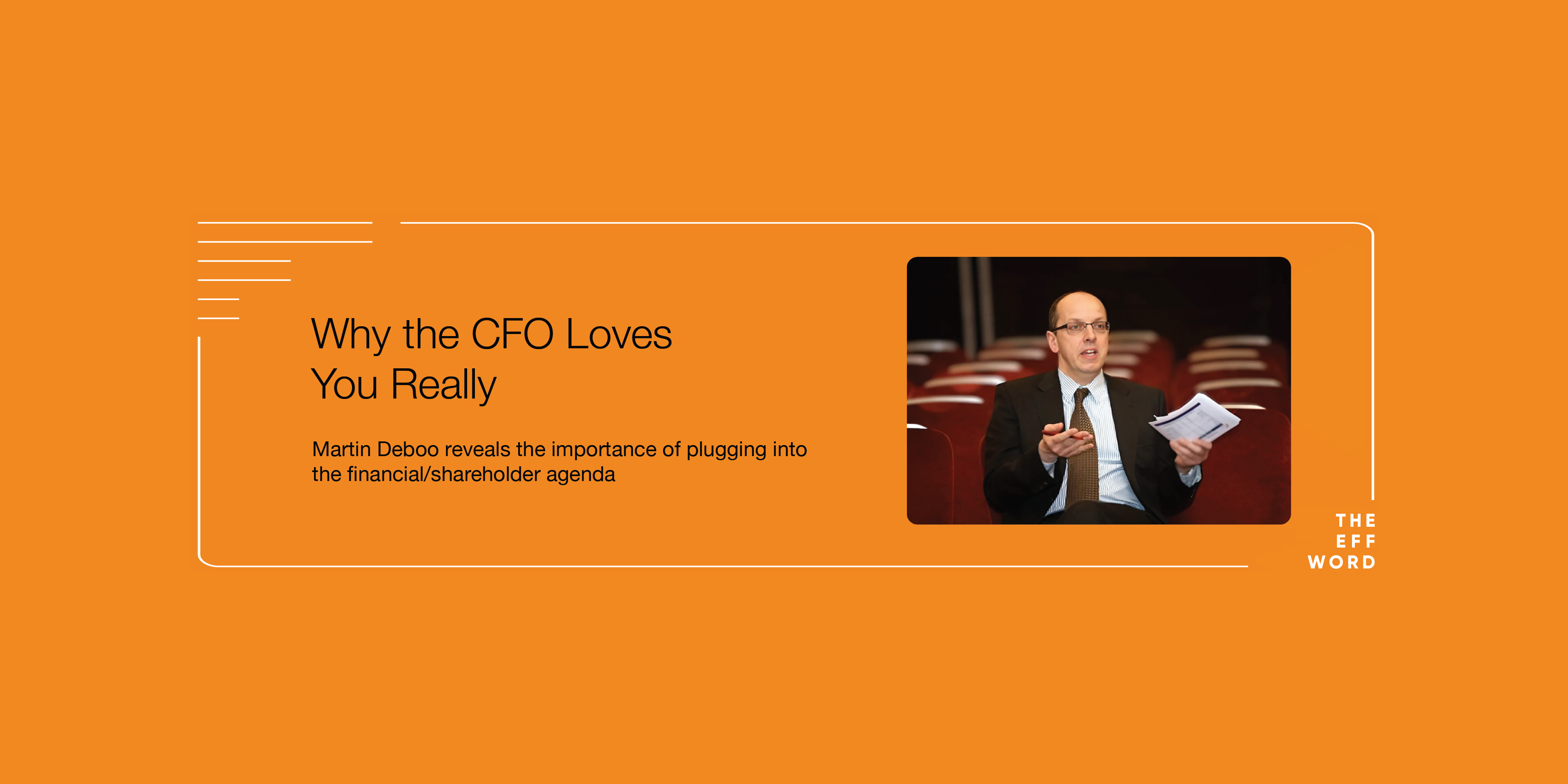
Why the CFO Loves You Really

How financial markets think about marketing investment

ABOUT THIS SESSION

How CFOs think about growth

Martin Deboo, an independent equity analyst operating as The Inquisitive Capitalist, examines how financial analysts and investors think about consumer-facing businesses and the role marketing plays in the metrics they care about most.


Drawing on 20 years of data from leading global consumer companies, the session shows how organic sales growth, the growth generated from existing brands, connects directly to share price, and why a one percentage point increase in organic sales growth is associated with a 3–4 turn increase in a company’s price-earnings multiple.


The session also covers the language of price, volume and mix, and how marketers can use it to enter financial planning conversations more effectively.

What you’ll learn


How financial markets value consumer-facing businesses

Financial analysts prize consumer-facing, marketing-intensive businesses for their ability to deliver consistent top-line growth and convert it to profits, reinvestment and dividends over time, what CFOs describe as ‘the virtuous circle of growth’.


Analysis of long-term sales data shows leading consumer goods companies have compounded sales at rates of 6–8% per year over decades.  

Why organic sales growth drives share price

Organic sales growth (OSG) is the primary metric connecting marketing activity to share price in consumer-facing businesses.


Analysis of European and US consumer staples companies shows that a one percentage point faster rate of organic sales growth is associated with an increase of 3–4 turns in the prospective price-earnings (PE) multiple.  

The language CFOs use to measure growth

CFOs and investors analyse sales growth through volume (more units sold), price (revenue per unit) and mix (the proportion of higher-value units).


Understanding these components and the trade-offs between them and marketing investment is the practical entry point for marketers into financial planning conversations. 

How to make the case for marketing investment

The session covers a break-even analysis approach to budget justification: rather than forecasting sales uplifts, calculate how much additional volume is needed to recoup the investment.


It also covers operating leverage, the mechanism by which volume growth drives profit growth at a proportionally faster rate, due to fixed overhead absorption. 


WATCH THE SESSION

Why the CFO Loves You Really

Presented by Martin Deboo, The Inquisitive Capitalist. 


THE SPEAKER

Martin Deboo

The Inquisitive Capitalist

Martin Deboo is an independent equity analyst and writer who has spent his career analysing consumer-facing businesses and their relationship with financial markets. Operating as The Inquisitive Capitalist, he works with marketing and finance teams to bridge the language gap between the two disciplines. This session draws on his analysis of 20 years of data from leading global consumer companies, examining the connection between marketing investment, organic sales growth, and shareholder value. 

Martin Deboo
THE EFF WORD SERIES

More from the series
 Each session examines a different dimension of advertising effectiveness.
EFF Word - Cost of Dull - Web Banners-01
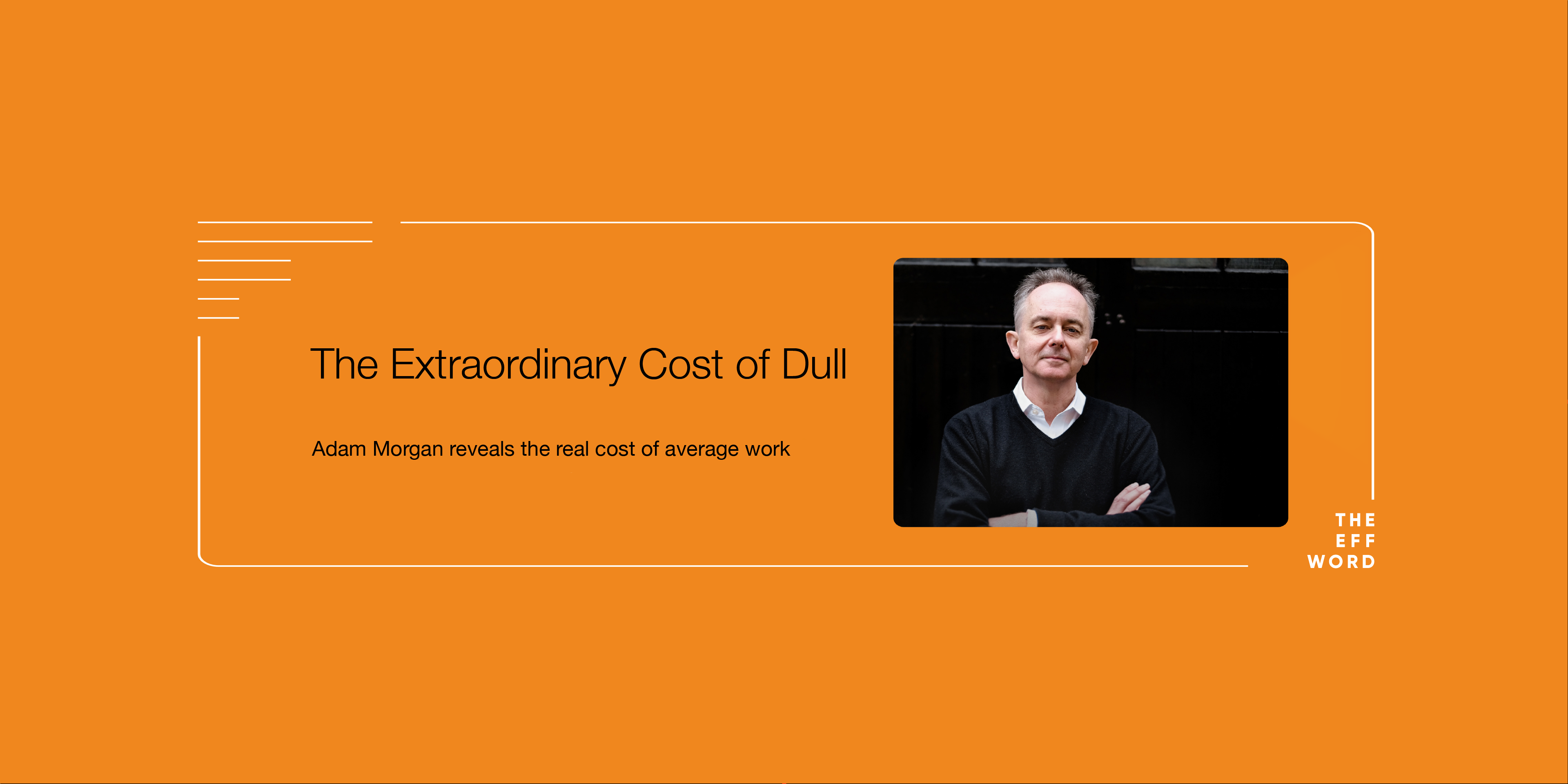
The Extraordinary Cost of Dull
Adam Morgan
Adam Morgan presents IPA and DMA effectiveness data on the financial cost of below-average creative quality in advertising. 
EFF Word - New Business Case_Desktop
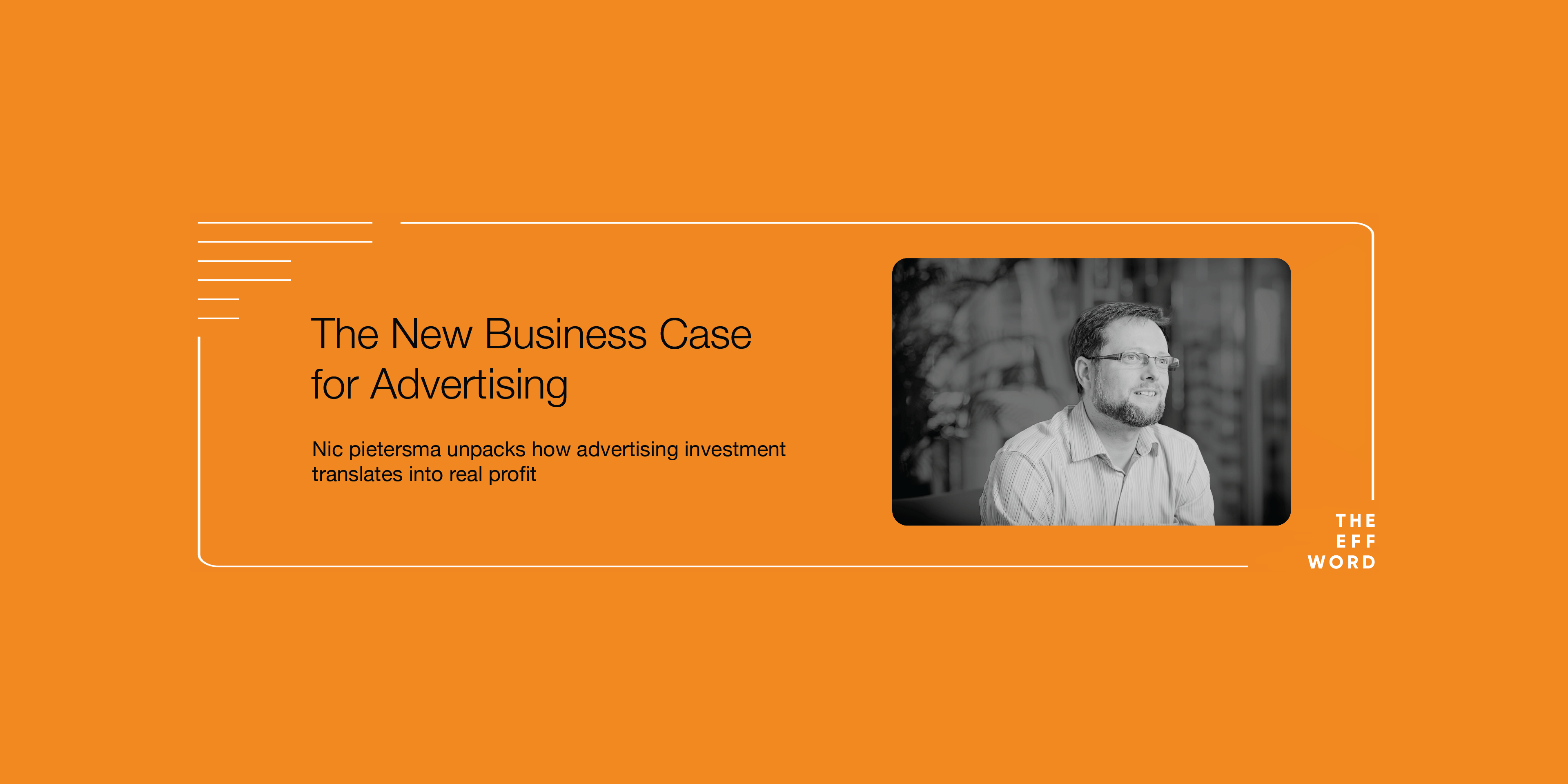
The New Business Case for Advertising
Nic Pietersma
Nic Pietersma presents Profit Ability 2 findings on advertising’s measurable profit return, across 141 brands and £1.8bn in media spend.
How to Speak - Ian - Hero
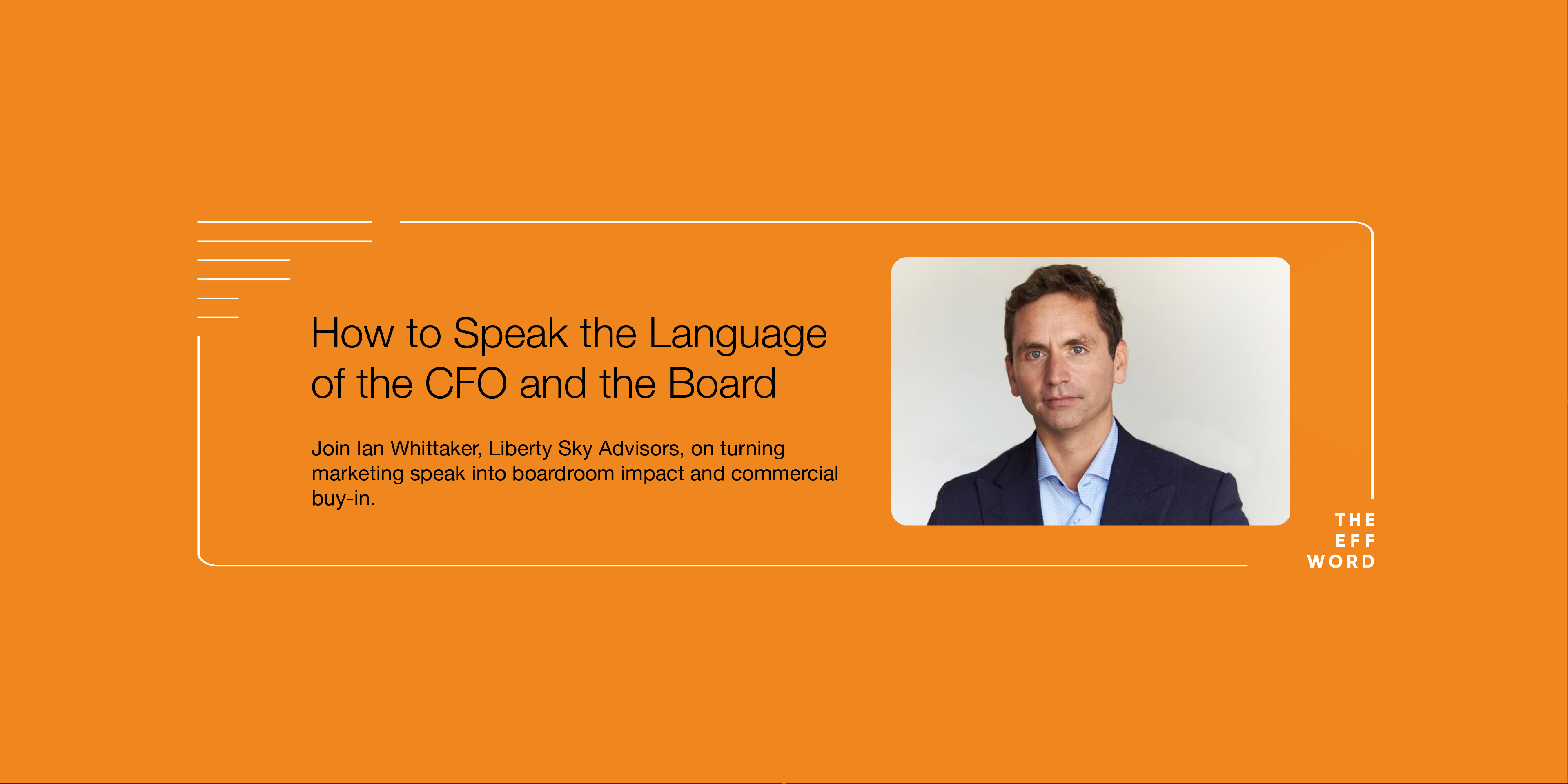
How to Speak the Language of the CFO and the Board
Ian Whittaker
Ian Whittaker examines why advertising is misunderstood at board level and how to reframe it as a capital investment, not a cost.
EDM header - Edited
Getting Closer to the C-Suite
Cathy Taylor
Cathy Taylor presents WARC research on the disconnect between CMOs and the C-suite, and the practical steps to close it.